Which Is the Best Setting for Engagement Rings?
Our product recommendations are made independently, but we may earn affiliate commissions if you use a link on this page.
An engagement ring is a treasure that should stay with you forever so it is important that it is something that you like and would be willing to wear. When it comes to choosing an engagement ring there are two main factors: the stone(s) and the setting.
In this guide we will assume you have already settled on the type and quantity of precious stones you want in your ring so now all you need is the setting. We are going to look at all of the most common styles and highlight their benefits.
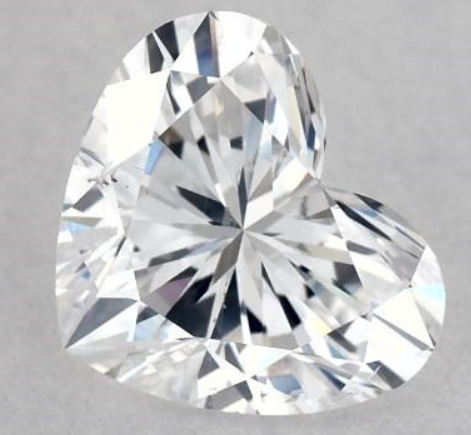
This is an entirely personal choice and the ring should in fact reflect your general personality. It may take you a while to find the perfect setting but if we can narrow down the field a little maybe we can help you move forward with perfecting that gorgeous engagement ring of your or your partner's dreams.
Solitaire Settings
We will start out with a classic setting type prized for its simplicity. This makes for a clean uncomplicated engagement ring that allows the gemstone to play the leading role. If you have a truly stunning diamond it is often wise to allow that to be the focal point of the ring.
In a solitaire ring there is just one single diamond or other gemstone which will usually be held in the setting with four prongs. It is the very essence of marriage tradition and is as popular today as it was almost a century ago when diamond engagement rings first became traditional.
Engagement rings have been around for hundreds of years but in the 1930s an ad campaign funded by the South African cartel which controlled diamond production started pushing the concept of using diamonds.
To this day diamonds are seen as the go to stone for engagement rings and a solitaire setting is often considered the best way to show off this valuable gemstone. It is considered the central symbol of the engagement promise with its own resiliency as a material being a metaphor for eternal love.
When using the solitaire style setting the most perfect diamond cut is considered to be the round brilliant. It is a classic and minimalist cut but it is the cut that offers the highest level of fire, brilliance and sparkle.
This is not to say any shape diamond would not also be absolutely stunning in a four prong solitaire setting. Other shapes such as princess cut, oval cut and emerald cut would all look amazing in this simple clean setting type.
Cathedral Solitaire
This is a notable variation of the classic solitaire and as the name suggests it has a structural aspect that is reminiscent of a cathedral. This is to say that the prongs holding the setting are “braced” by two arms which resemble the buttresses of a cathedral.
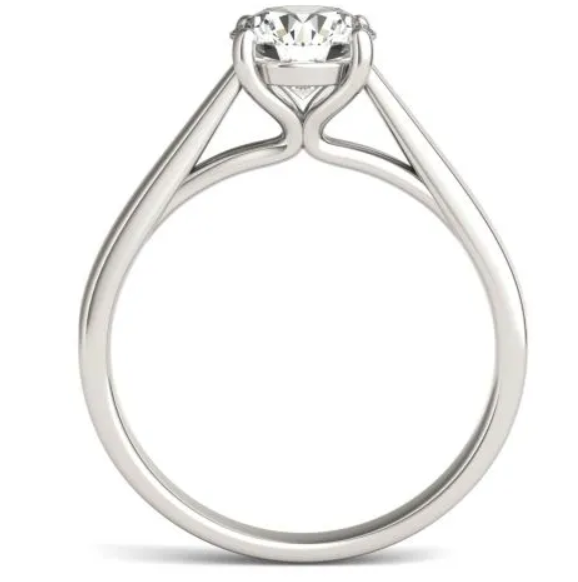
It is a subtle difference which can be added to a standard solitaire style to bring a more modern flair to the classic design.
Prong/Claw Solitaire Settings
The prong setting comes in two main options: the 4-prong and the 6-prong. Both types serve the same purpose in that they allow light to reach the bottom of the diamond just below the girdle (middle ridge of the stone).
The importance of allowing light to enter the bottom of the diamond is that you want the light to make its way through the diamond and back out of the top. This is where your fire and brilliance originates, giving you that famous diamond sparkle that is so prized.
Certain diamond shaped cuts have been crafted specifically to take in the light and allow it to exit through the top of the gem in a beautiful way. If you were to fully encase the base of the diamond the light would not be able to play its magical tricks.
The four-prong setting obviously gives slightly more light access than the 6-prong but there is a certain gravitas to the 6-prong which is based on a name association.
Also known as the Tiffany setting, a six-prong design has been patented by the famous jewelers Tiffany & Co. This does not mean only Tiffany can use 6-prongs but they do have a setting basis that no others can use and the name to back it up being deemed superior.
When it comes to Tiffany you could have two near identical rings in all aspects but if one was made by Tiffany and came in that little blue box it is going to cost significantly more. It’s the name brand mentality that sees people choose a certain brand of ketchup over another despite the fact that there is no real difference in quality.
Which Is Best 4-Prong or 6-Prong?
If choosing a solitaire how many prongs should you opt for? The truth of the matter here is that there really isn’t a great deal to choose from between the two styles. In theory a 6-prong setting should hold the diamond more securely although a well maintained and crafted 4-prong layout is plenty strong.
As mentioned there is a light difference between the four-prong set up and the six-prong as scientific testing has shown a small dip in light when using 6-prong settings. The reason is obvious as there are two extra prongs blocking light.
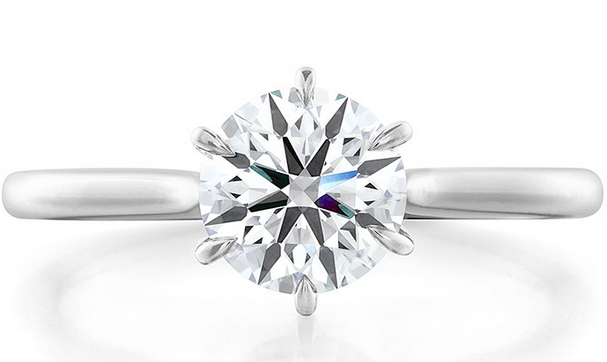
Importantly however this difference in light is very small only really perceivable with highly tubed light measuring equipment. To the naked eye the difference is not really noticeable.
Finally there is an obvious but again minimal difference in cost when it comes to the two settings, The prongs will be made from precious metal so by adding two more you do add a little to the price of the setting. It's simply a case of material costs.
The differences are subtle although you may find some of them important to you and this may cause you to lean one way or the other. It really comes down to personal choice so whichever you find the most appealing should be the one to choose.
Bezel Settings
If the prong setting just isn’t to your taste and feels a little archaic there are options with a more modern look which may appeal more. One such option is the Bezel setting. Rather than prongs that hold the diamond aloft of the finger you would get a metal ring that surrounds the gemstone holding it in place.
This may look cooler and more up to date but it does have some drawbacks when it comes to showing off the diamond. You don’t spend money on an expensive diamond without intending to try and show it off to its best possible extent.
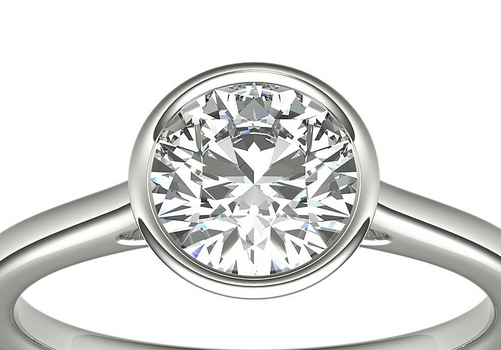
The Bezel setting will block some of the light from entering through the sides of the diamond which a prong setup would not block. As mentioned, light is vital for the spark and brilliance of the diamond to be fully appreciated.
Additionally the whole encircling nature of this setting will hide a significant amount of the diamond itself from view. This can be of benefit if you need to hide an inclusion in the diamond but if you have a flawless diamond you are wasting some of its beauty.
As a setting it still has that classic look to it while offering simplicity with elements of modern design. It is not unattractive although it can hide some of the beauty of the diamond which may be a negative for some.
Pavé Settings
This exotic sounding engagement ring setting is based around a solitaire diamond setting but features accent diamonds. These smaller diamonds run along the shanks of the ring making a row of sparkling jewels that can catch more light than just the single gem.
Those who took French at school may already know that Pavé means “paved” and this is essentially what is happening on either side of the main diamond. It is a paved path of tiny diamonds that lead up to the big main gem in the center.
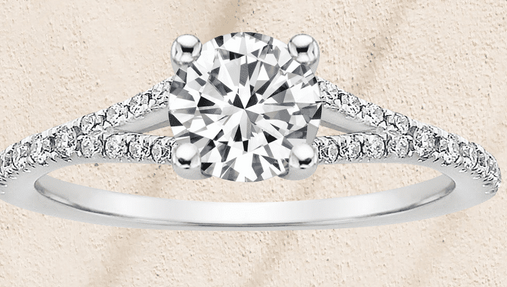
In some settings these additional diamonds may be more recessed but the Pavé setting has them standing proud on their own prongs and spaced apart allowing all diamonds to show off their maximum brilliance.
This is obviously a more complicated design and will cost more but when done correctly it is stunning to look at. It is viewed as the most natural way to show off these gemstones and will mean a little more work when it comes to choosing the stones.
Cluster Settings
This is a very complex setting which has a whole lot going on in many ways. It is like the Pavé but instead of one large central diamond the center plate features a cluster of smaller accent stones. The benefit of this being that several small stones will be less expensive than one large one but will still achieve a similar effect.
At a glance a cluster setting may look like one large diamond which is impressive but it is in fact several closely packed as the central focal point. The effect of these diamonds is not as visually stunning as a larger single diamond as they lack less fire and brilliance together.
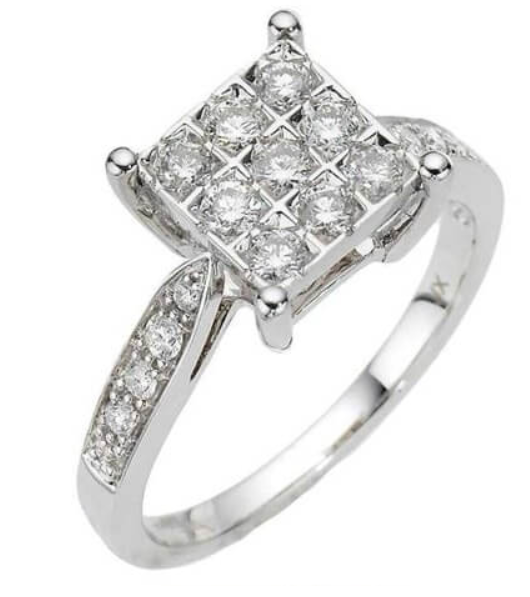
You may wonder why more diamonds together can not create better sparkle than just one. The answer is simple: it is because they are clustered together and the light that should induce the sparkle is being blocked out by the neighboring gemstones.
The light only enters through the outer edges of the cluster but can’t get to the internal edges of the diamonds because they are pressed too closely together. If the light can not enter in at the sides and bottom of the diamonds there is nothing coming out through the top which leads to little or no sparkle.
A cluster setting may look impressive with all those diamonds but this is very much a case of too many cooks spoiling the broth. When so many gems are fighting to sparkle, none can truly show off their beauty. Basically, a solo diamond will almost always outshine a cluster.
Three-Stone Settings
It is hard to surpass the gemstone beauty of a solitaire setting, its very design is intended to maximize the qualities of the diamond. It does this with classical appeal which is indeed hard to top. This is of course unless it matches up against a three-stone setting.
Like the solitaire you have a focal central diamond held aloft with prongs to maximize the light transmission and sparkle. Then you go ahead and triple the fun by adding two smaller diamonds, one on each side of the central gem flanking it.
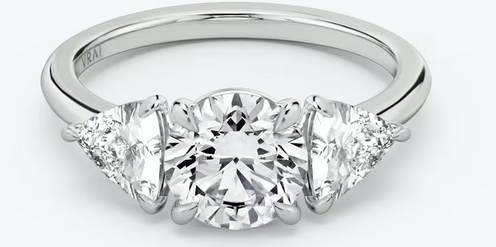
You now have three diamonds kicking out fire, the larger central one and the medium-sized flanking gems. The golden rule here however is that the flanking diamonds must not be of better quality than the central one.
You need the balance of the central diamond having greater brilliance in order to allow the flanking accent stones to play their all important best supporting gemstone roles. These accent stones should have comparable color and clarity so that they work as a trio with the main stone but their cut quality should be at least but no more than a grade lower.
So if the main diamond is excellent the accent diamonds should be graded very good. The color should fall into the same range so if the central stone is F color then the accents should be F or as close as possible. Their clarity should also match as closely as possible as well.
Tension Settings
For the thoroughly modern couple you have settings that use physics to create a truly impressive look. As the name suggests these settings are designed to use tension to hold the diamond in its place. This is a recent trend which is certainly catching fire.
The diamond is held in place by the two open ends of the rings shanks with the force of the metal's tension alone. This is a real conversation starter because it does move away from the norms that many people expect with engagement rings.
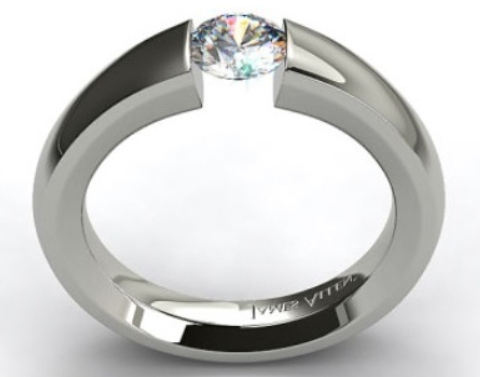
There’s a chance grandma won’t love how this looks but then again she probably hates the clothes her grandkids wear these days. It doesn’t even try to play the classic ring style game and frankly I don’t take issue with that.
This is a setting that can be seen as a true expression of your personal taste and attitudes and there is nothing wrong with that. If done poorly it can affect the light flow to the diamond and sometimes may seem unnecessarily bulky.
However when done right you can actually get better light coverage than a solitaire setting and a beautiful almost floating effect from the diamond. It may not have the classic magic but a gemstone defying gravity sounds pretty spectacular to me.
Halo Settings
Imagine combining a Bezel setting with a Pavé setting and you may be able to guess what a halo setting will look like. You have the central diamond encircled by a ring like you do with the Bezel but rather than being a plain metal ring it is actually encrusted with accent diamonds creating a very impressive look.
The intent of this setting is to try and make the central stone look bigger which at a glance definitely works. Your senses can certainly be fooled into believing the ring of diamonds around the central gem are part of the larger diamond itself.
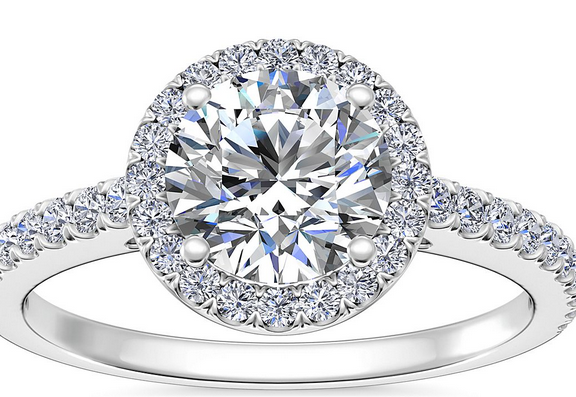
This is a great option for if you have a tight budget but would like the appearance of having a bigger central stone. There are some important factors in making this work however. The accent stones must be of the same color and clarity as the main stone or else they may stand out as different. There is some wiggle room but a noticeable difference in color or clarity can completely ruin the intent of the design.
Channel Settings
The channel setting is very similar to the Pavé setting in all aspects but one. Whereas the shank diamonds are raised in a Pavé setting they are actually contained in a channel with a channel setting.
This makes the accent diamonds more flush to the surface of the ring and encloses the sides of the gems inside the channel. This will create a thicker band on the ring which some people prefer as it can be more comfortable than the narrow thin bands.
This is somewhat of a safety setting as with raised diamonds you do run the risk of hurting your fingers on any sharp edges on the accent diamonds. When they are encased in the channel there is less risk of this.
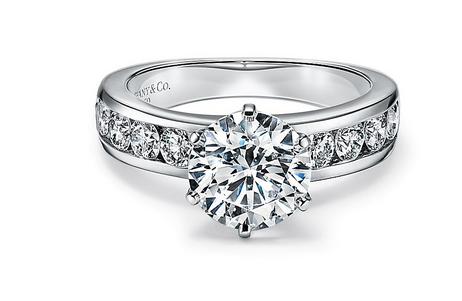
Obviously as you have already probably guessed you will not get a lot of sparkle from these accent diamonds. This is because the light can’t get to the sides. It does kind of beg the question as to why the accent diamonds are really needed if they are not given the chance to sparkle.
At best the accent diamonds will make the band look more interesting than just having a standard solitaire setting. It also gives an excuse for a thicker, more comfortable band on the ring but otherwise this setting does not add a great deal.
Split Shank Settings
Think Uma Thurman’s dance in Pulp fiction and those peace sign finger shapes she was throwing and you may get an idea of what the split shank setting looks like. Essentially it's like the shanks of the ring split into two before they reach the central gem to create open spaces at each side of the diamond.

The two sides of the shank will then connect to the setting in which the diamond is held which may be halo, prong or bezel. This type of setting can encompass a number of other styles adding a level of elegance that may not have existed without splitting the shanks.
The potential for artistic expression is high with this type of setting which can be a big draw. You can have a host of accent diamonds or keep it more simple. Variations of this type of setting seem to be growing in popularity as the years go by.
Which Engagement Ring Setting Is Best?
Throughout this article we have mentioned some of the top engagement ring setting styles and introduced you to some of their positives and negatives. You ultimately know what you want from a ring, be that classical and understated or flashy and super modern there are options.
Ultimately the choice of the engagement ring setting that is best for you depends on what you like. We can advise you as much as possible but we don’t have to wear the ring. Choose the ring that you feel best embodies who you or your partner are.
Final Thoughts
With every diamond being as unique as a snowflake there is nothing wrong with wanting something unique when it comes to the setting. This is a special piece of jewelry that signifies unending love and should be something that is adored and treasured.
We hope our run down of setting options has been of help to you and it gives you some idea of what type of ring you would like.
Reference Diamond Size Chart
If you use any of the definitions, information, or data presented on Diamond Size Chart, please copy the link or reference below to properly credit us as the reference source. Thank you!
-
<a href="https://diamondsizechart.com/blog/which-is-the-best-setting-for-engagement-rings/">Which Is the Best Setting for Engagement Rings?</a>
-
"Which Is the Best Setting for Engagement Rings?". Diamond Size Chart. Accessed on April 28, 2026. https://diamondsizechart.com/blog/which-is-the-best-setting-for-engagement-rings/.
-
"Which Is the Best Setting for Engagement Rings?". Diamond Size Chart, https://diamondsizechart.com/blog/which-is-the-best-setting-for-engagement-rings/. Accessed 28 April, 2026
-
Which Is the Best Setting for Engagement Rings?. Diamond Size Chart. Retrieved from https://diamondsizechart.com/blog/which-is-the-best-setting-for-engagement-rings/.