What Is an I2 Clarity Diamond?
Our product recommendations are made independently, but we may earn affiliate commissions if you use a link on this page.
When it comes to precious stones arguably diamonds are the very top of the heap. Forged in immense heat and pressure miles below the earth's surface over thousands of years these lumps of essentially carbon can become amazing gemstones.
These gems look great when set into various types of jewelry including broaches, necklaces or even a diamond engagement ring. Depending on their quality and cut these diamonds can be truly stunning offering a sparkle or fire that can be almost hypnotizing.
The difficulty with diamonds however is that you could perform the most perfect job cutting a diamond but if the gem's natural quality is poor it will not be of value. Diamond value is dependent on the so-called 4 C’s cut, carat, color and clarity.
In today's article we are going to look at the clarity aspect of diamonds and most specifically what a grade of I2 means for a diamond. We will discuss how it affects the look of the gem and its value.
Diamond Clarity Explained
The word clarity essentially means “the quality of transparency or purity.” Now technically as diamonds are 100% carbon they are considered pure and the colorless ones are considered transparent. In reality few diamonds are completely colorless but that is a topic for another day.
Clarity in terms of diamonds then is one of the 4 C’s and is actually one of the more important aspects when it comes to the gemstone's value. When you look into a colorless diamond you are hoping to see nothing but clear diamond material.
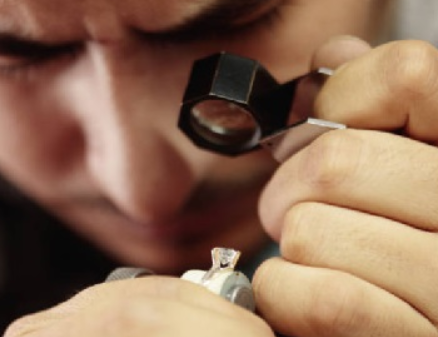
To the naked eye many diamonds may appear completely clear but under scrutiny you would likely see tiny imperfections when viewed under magnification. These imperfections are referred to as blemishes or inclusions.
The more of these inclusions you can see the lower the diamond's clarity rating will be and the less desirable it will be to potential buyers. The main issue is that a perfectly clear diamond reflects light in very pleasing ways. If it is heavily included however this can ruin the sparkle which is vital to the allure of a quality diamond.
How Is Diamond Clarity Graded?
There are gemology labs the world over whose job it is to assess the diamonds sent to them by retailers to determine their quality. They work to certain industry standards assessing the stones and do so in a very neutral and fair manner.
The only money lab gemologists make from diamonds are the fees paid to run the assessments. They do not benefit from the sale of diamonds so they will usually without fail give a true and accurate rating of the diamond.

When checking the clarity of a piece they have certain grading levels into which they can group the diamonds. These are as follows.
- FL (Flawless): This is the best grade a diamond can receive for clarity and it means that at even 10x magnification the tester could not find any form of inclusion, flaw or blemish in the piece. Basically they don’t come any better than this clarity level.
- IF (Internally Flawless):This is the next best thing to be completely flawless. Essentially some very small inclusions may be visible with intense scrutiny under 10x magnification but not to the naked eye.
- VVS (Very Very Slightly Included): This category is usually subdivided into VVS1 and VVS2 with the 1 being slightly clearer. We are still in the territory of almost completely clear but there are likely just a few more flaws than IF diamonds and they are still only visible under magnification. In fact a skilled grader may struggle to locate these flaws.
- VS: (Very Slightly Included): Again we have a subdivision with VS1 and VS2 being categories. Again the 1 is slightly clearer than 2. We are starting to get more noticeable flaws but still only under magnification. Graders will have an easier task seeing inclusions at this level.
- SI (Slightly Included): Separated into SI1 and SI2 we are finding more noticeable inclusions in the diamond. It is easier to see them under 10x magnification and they are more obvious and numerous.
- I (Included): Finally we come to the three grades of included: I1, I2 and I3. The flaws are obvious under magnification and may also be visible with the naked eye. The light handling qualities of the diamond will likely be affected in a noticeable way with these levels of inclusion. The lowest grade is I3 which means the subject of our piece today isn’t quite the worst quality in terms of diamonds.
Now obviously there are much lower quality diamonds than I3 but this is the cut off point when it comes to the top quality gemstones. Anything below an I3 would not be really desirable as a quality wearable diamond.
What Does I2 Clarity Mean to a Diamond?
As you can tell from the above section I2 graded diamonds are just one step up from the bottom of the scale. There will be some noticeable flaws that can be spotted with the naked eye both internally and externally.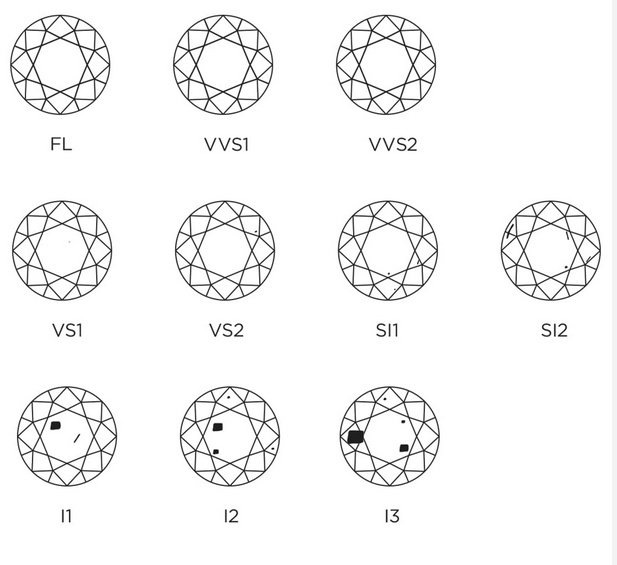
They are not great quality diamonds at all and many people might shy away from purchasing this quality of diamond. That said there are some diamond cut shapes that can be used to take an I2 diamond up a notch or two in people's estimation.
These cuts are intended to help hide flaws but will generally lead to diamonds with little sparkle. These cuts are known as fancy shapes and as such are often expected to have lower levels of brilliance. Lower quality gems are often used for these cuts as the need for brilliance is less.
I2 Clarity Diamond Value
Many online retailers will not even stock I2 diamonds or lower. James Allen for example stocks I1 quality diamonds but no lower. Retailers like Brilliant Earth and Blue Nile don’t have any included diamonds in their inventory.
That said you will be able to find retailers out there selling I2 clarity diamonds and for a 1-carat diamond you may pay between $1,900 - $2,800 depending on other quality aspects that may be in play. This may sound like a lot but comparatively speaking these are almost the lowest price quality diamonds you can get.
A Few I2 Clarity facts to Consider
If you are considering saving a little money and going for an I2 diamond it may be worth noting a few facts.
- When compared to an I1 clarity diamond which may have flaws under magnification the I2 will likely have imperfections that you can see with the naked eye under close scrutiny.
- Multiple imperfections in a diamond can have a big effect on the brilliance of a diamond so if you have an I2 diamond cut as a round brilliant (which is a cut that maximizes sparkle) the diamond is working against itself.
- Once you buy an I2 diamond chances are you should try to resell it at a later date or trade it in and you will get either a very low offer or no offer at all.
- Some of the larger inclusions possible in this grade of diamond can make them more prone to chipping.
Final Thoughts
Are I2 diamonds the worst in terms of clarity? No, but they surely are not the best. Most of the top online retailers do not even stock diamonds of this quality although some jewelers will. They will be priced accordingly and if compared to a diamond with better clarity will stand out like a sore thumb.
This doesn’t make them worthless but they are definitely on the budget end of the scale and for a first entry into the diamond world perhaps not a bad buy. If you do have a diamond of this quality you will want it in an emerald cut or similar which is not intended to maximize sparkle. These can be more forgiving visually.
Reference Diamond Size Chart
If you use any of the definitions, information, or data presented on Diamond Size Chart, please copy the link or reference below to properly credit us as the reference source. Thank you!
-
<a href="https://diamondsizechart.com/blog/what-is-an-i2-clarity-diamond/">What Is an I2 Clarity Diamond?</a>
-
"What Is an I2 Clarity Diamond?". Diamond Size Chart. Accessed on April 28, 2026. https://diamondsizechart.com/blog/what-is-an-i2-clarity-diamond/.
-
"What Is an I2 Clarity Diamond?". Diamond Size Chart, https://diamondsizechart.com/blog/what-is-an-i2-clarity-diamond/. Accessed 28 April, 2026
-
What Is an I2 Clarity Diamond?. Diamond Size Chart. Retrieved from https://diamondsizechart.com/blog/what-is-an-i2-clarity-diamond/.