What Is a Certified Diamond
Our product recommendations are made independently, but we may earn affiliate commissions if you use a link on this page.
The average person on the street if faced with a diamond for the first time would have no clue as to tell if it was of good quality or for that matter even real. Believe me countless people over the centuries have fallen foul of diamond scams and they exist still to this day.
The training required to become a diamond expert is extensive so most of us have to rely on the work of others but we do not always have to believe the word of the seller. This is where legitimate diamond certificates come into play.
Now be warned there are two types of diamond certificates you may be offered as proof of a diamond's quality. One is independently rated while the other may be an in-house appraisal made by the staff of a particular jeweler.
I bet you can guess which one is the important one when it comes to buying a good diamond. In this article we will be looking at the independent diamond certificates to teach you what you need to be looking for in order to avoid being duped with a poor quality diamond or even worse a straight up fake.
What Is a Diamond Certificate?
We will start by pointing out that some jewelers will offer certificates of appraisal which are essentially their take on what the diamond should be worth. Now I am not going to call them liars because many jewelers are very honest but if anyone has incentive to inflate a diamond's value it would be the very people trying to sell it.
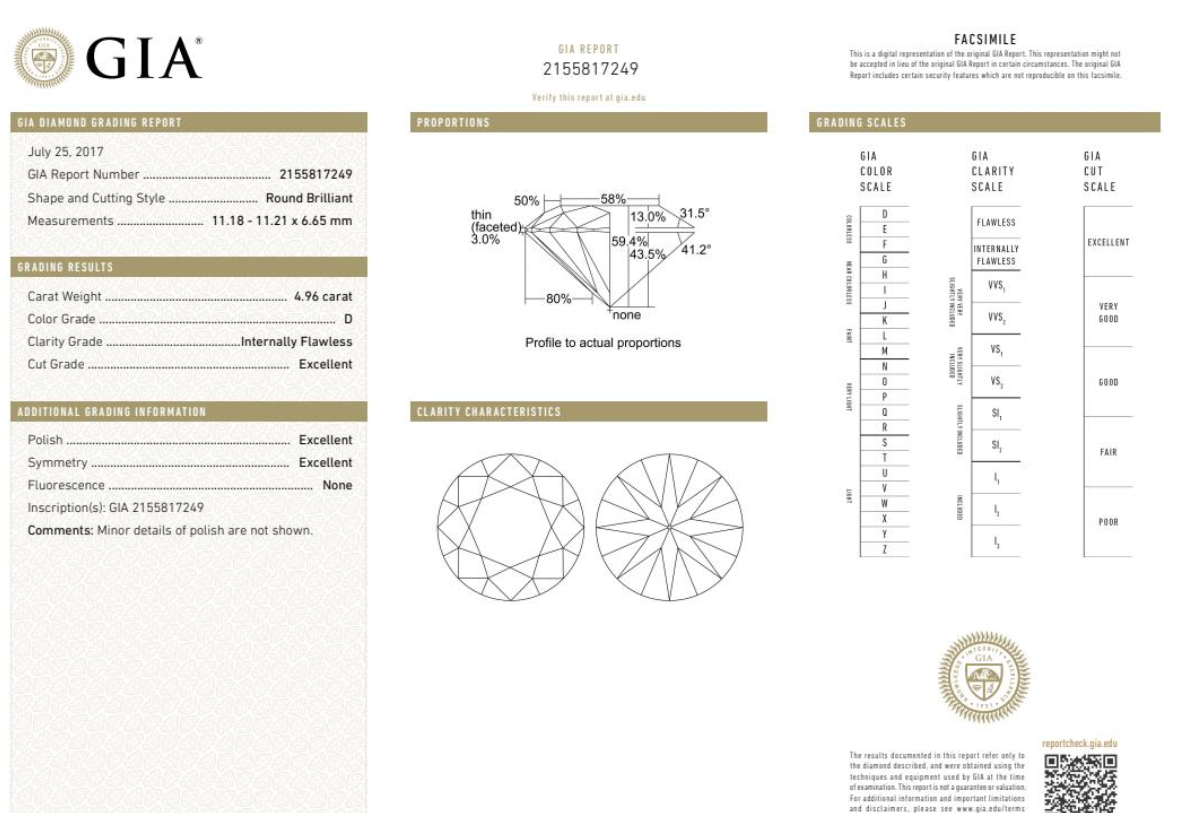
For our purposes today we will be talking about the grading certificates that are produced by third-party gemology labs such as:
- GIA – Gemological Institute of America. GIA is held by all (literally) to be the industry gold standard
- AGS – American Gem Society. They do go into more detail in their grading than other labs
- GCAL – Gem Certification & Assurance Lab
- IGI – International Gemological Institute
- EGL – European Gemological Laboratories
These labs are independent gemology professionals whose job it is to assess high quality diamonds based on the 4 C’s of diamond quality: cut, clarity, color and carat. They do not benefit from the sale of the gems they assess in any way other than being paid to make an assessment.
It does not matter to these testing bodies what grade they attach to the diamond. They do not make more money either way so it is in their best interest to be honest and thorough in their work.
These gemology labs create detailed reports that grade each individual diamond based on the 4 C’s with specific grades for each aspect of quality. Each tested diamond will have a serial number engraved into its surface and this same number will be listed on the report.
You may even see a photograph of the diamond and perhaps a diagram which explains the dimensions of the diamond on these reports. They are detailed and intended to allow you to match the report to the right diamond.
Why Should You Buy a Certified Diamond?
When it comes to buying diamonds there is no guarantee of quality unless the gem has been assessed independently. Because diamond prices rarely fluctuate, the average person will never buy a diamond with the intent to sell it on for a profit; it simply doesn’t work like that.
You buy a diamond, set it into jewelry and the intention is you keep it forever or pass it down through the family. If you find yourself needing to sell the diamond again at a later date you will need to have it appraised for value. This might be the only time you would realize you did not get as quality a diamond as you thought you had purchased.
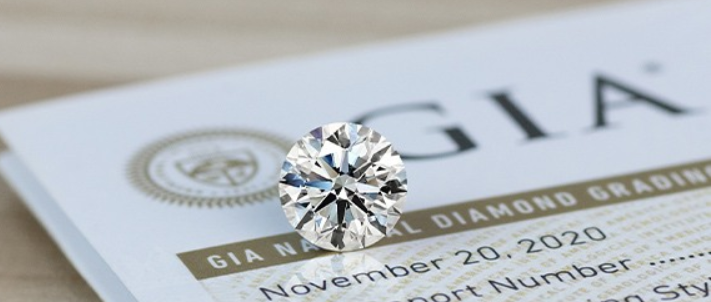
Official grading reports ensure that the diamond you purchased is of a certain quality although they do not list a value. The value is determined by the diamond market and the markups placed on the gems by the jewelers.
It is almost a guarantee that if you have to resell a diamond you will make a loss especially if it was set into some form of jewelry. However if you have the official grading report you can sell the diamond without spending extra money on getting it appraised.
If you are ever worried about the honesty of a jeweler you will find the reputable ones not only have their gems assessed by independent gem labs but they will also happily show you the reports before you buy the diamond. In many ways it is a source of pride for the jeweler to be able to prove the quality of their diamonds.
Is the Term Certificate Correct?
This is an important point because some jewelers will use the term diamond certificate when in fact it is actually a diamond grading report. This may be a little nit picky because as long as what they mean is the grading report it doesn’t matter if they call it a certificate.
The confusion does come in a little bit though because their interpretation of a diamond certificate is an appraisal performed in house to justify the price being asked for the diamond. This will not feature the detailed grading you find on a diamond report so you can only trust the word of the jeweler in this case.
Diamond Certificates vs Grading Reports
As we have already mentioned there are two types of diamond certificates, one that is created by an independent entity and the other by the seller of the diamonds. In this section we will look a little more closely at both to compare them.
Gemological Grading Reports
A high quality jeweler will often send their diamonds to one of several independent diamond grading companies to have them assessed before they affix a price to the gems and put them up for sale. These companies are paid the same no matter what the quality of the diamonds turn out to be so they do not show favoritism or partisanship in their assessments.
There are four major gemology labs that the bulk of the world's top quality diamonds will pass through. These are:
(GIA) Gemological Institute of America: The GIA is recognized worldwide as the industry experts in diamond grading in fact they pioneered the 4 C’s. They have over 75 years in the business. They are the originators of diamond certification. When you buy a GIA certified diamond you can trust that it will be of the highest quality.
(IGI) International Gemological Institution: They are perhaps not as strict as GIA and they are also cheaper which makes an IGI graded diamond perhaps a little less respected.
(EGL) European Gemological Laboratory: EGL diamonds are evaluated by at least two labs and use a subjective grading method. These diamonds may be lower priced than GIA certified diamonds.
(AGS) American Gem Society: AGS diamonds are often more stringently tested than GIA. They are usually more detailed and include hand plotted illustrations of all blemishes or inclusions.
Jewel Appraisal Certificates
As having the diamonds graded independently costs the jewelers money some are not willing to go to this expense. They instead perform their own appraisals of the items and may well be just as qualified to do so as the graders in the independent labs.
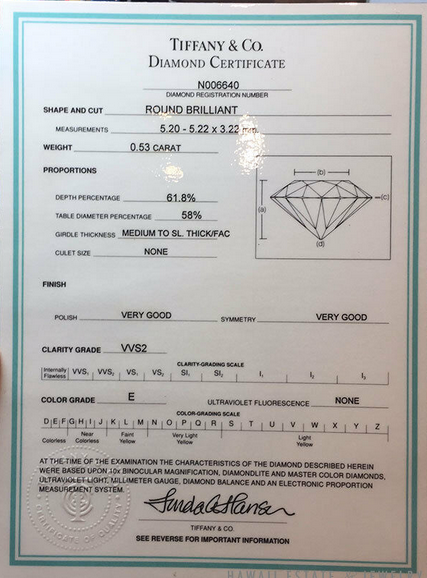
As experts in the field and with the qualifications to back that up they are within their rights to self appraise the gems and can call the resulting certificate legitimate. At the end of the day when they put their own reputation on the line so generally it does not benefit them to outright lie.
Just because the seller of the diamond is producing the diamond certificate does not mean that the gemstone is not of good quality. Personally I would favor the independent grading over the jeweler's own assessment just because you know for sure that the gemology labs do not benefit in the least bit by trying to make a diamond appear better than it is.
It may interest you to know that famous jewelers Tiffany produces its own diamond certificates and it tends to charge a huge premium for its gemstones. They have cemented a huge reputation for quality so people often do not care about this.
The reason I mention this is that despite their reputation, if you tried to sell the same diamond, one with a Tiffany certificate and one with a GIA the GIA certified gem would bring more money. It’s not that people do not trust the quality of Tiffany because they certainly do and customers pay huge markups on their gems as proof of that. The reason GIA gets more respect is because they simply have nothing to gain by embellishing a diamond's quality.
Where Is the Best Place to Get Certified Diamonds?
You can find third-party certified diamonds in jewelers and online in many places so you do have a lot to choose from. If the jeweler you go to only has their own appraisals as proof then it is your own judgment as to if you wish to shop there.
When it comes to online purchases you will find companies such as Blue Nile, Brilliant Earth, Whiteflash and James Allen all offer independently graded diamond certificates from one or more of the major gem labs.
These websites can often be cheaper than brick-and-mortar jewelers and they may have 3D imaging of the diamonds to go along with the grading reports. Some go even further and track the diamonds back to their point of origin. Brilliant Earth for example does this as part of their commitment to beyond conflict-free diamonds.
Final Thoughts
When it comes to diamond certificates you will either be presented by a grading report of a specific diamond as performed by an independent body of a value appraisal that is created by the seller of the gemstone.
It is no big surprise that people tend to want the independent assessment of the gem because as we have mentioned several times there is no benefit to the gem labs to make false claims concerning the diamond's quality.
This does not mean a jeweler's own appraisal can’t be trusted. They may be very reputable and know just as much as the experts at the labs. The simple point is there is no better evidence than that coming from someone who does not benefit either way.
Reference Diamond Size Chart
If you use any of the definitions, information, or data presented on Diamond Size Chart, please copy the link or reference below to properly credit us as the reference source. Thank you!
-
<a href="https://diamondsizechart.com/blog/what-is-a-certified-diamond/">What Is a Certified Diamond</a>
-
"What Is a Certified Diamond". Diamond Size Chart. Accessed on April 28, 2026. https://diamondsizechart.com/blog/what-is-a-certified-diamond/.
-
"What Is a Certified Diamond". Diamond Size Chart, https://diamondsizechart.com/blog/what-is-a-certified-diamond/. Accessed 28 April, 2026
-
What Is a Certified Diamond. Diamond Size Chart. Retrieved from https://diamondsizechart.com/blog/what-is-a-certified-diamond/.