What Effects a Diamonds Shine the Most?
Our product recommendations are made independently, but we may earn affiliate commissions if you use a link on this page.
To look at a diamond it is hard to believe that they started out as carbon, a completely black substance. Thousands of years ago hundreds of miles underground and under extremes of heat and pressure this carbon was compressed and crystalized.
The result of this process was rough diamonds, still not that impressive to look at but once processed and cleaned this natural marvel turns into something considered rare and beautiful. Natural diamonds have a lot of amazing properties, not least of which is the fact that they are the hardest natural substance on the planet. The big draw with diamonds though is their sparkle.
In this article we are going to learn more about the sparkle, fire and brilliance produced by diamonds. We will discuss how it is achieved, maximized and which cuts create the most sparkle. Hopefully by the end of the article you will know which diamond is right for your brilliance needs.
What Affects a Diamond's Sparkle?
The potential for impressive sparkle is in all diamonds. The key is finding a way to coax the best results from the gem. When it comes to sparkle three of the diamond's “4 C’s" are involved in how brilliantly the gemstone can shine. These three are cut quality, clarity and color. The shape of the diamond is also very important.
How Does the Shape of Cut and Cut Quality Affect Sparkle?
The sparkle essentially all comes down to facets or the number of cuts made in the gemstone. As an example a round brilliant cut is more sparkling than an oval cut because it has more facets. These facets create surfaces which reflect light from multiple angles at the same time.
Other diamond shapes like emerald cuts and heart-shaped gems have fewer facets resulting in less reflective surfaces or angles. These diamonds still have light manipulating properties but they will tend to have flashes of brilliance rather than a constant sparkle.
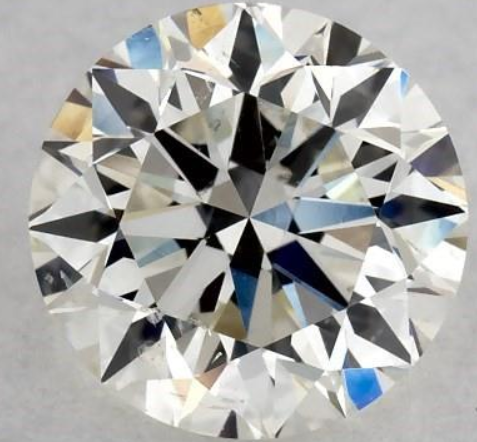
It is not just the shape into which the diamond is cut that affects this sparkle, the quality of the work is actually very important as well. There are a number of angles that a facet can be cut to all of which have an impact on how light reflects.
This is the reason that cut quality is often so very important to the value of the diamond. If the job is done poorly the sparkle or fire may be weak and the diamond will be less appealing. If the craftsmanship is perfect and the sparkle has been maximized the diamond is far more valuable.
The diamond cutting professionals have to walk that fine line when it comes to cutting their facets. If the cut is too deep and light they may be lost in the stone. However if they are too shallow you won't get the maximum brilliance.
Gemology experts measure the angles of these cuts when they grade high-quality diamonds for the major third-party grading labs. They use the perfection of the angles as one of the elements for which they assess the cut quality.
With lasers being the most used in diamond cutting today most quality diamonds are in the very good to excellent range. This will generally only vary if the craftsperson is trying to maximize the weight of the piece and avoid wasting rough diamonds. This is not a standard however as cut quality is more important than a slight increase in diamond weight when it comes to value.
How Does a Diamond's Color Affect Brilliance?
Diamonds come in a variety of colors and even the white ones which produce the most sparkle may have hints of color in them if you look into the diamond itself. For a diamond to achieve its maximum sparkle it needs to be as close to completely clear as possible.
The clearer the diamond is, the more light can pass through. As a result the light will reflect off the facets creating the fire and brilliance that is so sought after. Clear diamonds are rarer so are the most valuable but they can tend to have a brown or yellowish tinge when you examine them more closely.
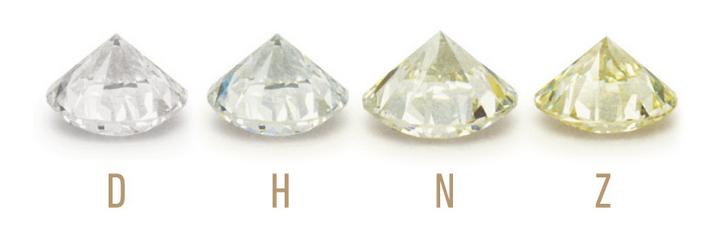
The more color you find in a clear diamond the less reflective it will naturally be and the weaker the sparkle. When it comes to the natural color of the diamond there is nothing you can really do to fix that. There are various levels of grading when it comes to color in quality clear diamonds ranging from completely colorless to very faint yellow.
If there is too much color to the diamond you start to get into the territory of it being a fancy diamond and these are usually less valuable unless they are a rare color.
How Does Clarity Affect Sparkle?
When it comes to high quality diamonds the clarity issue should be minimal but it is of course not completely a non-factor. Quality diamonds can range from flawless to various levels of included. Often imperfections in quality diamonds are only visible under magnification of around 10x. However, in included diamonds you may see blemishes and flaws with the naked eye as well.
The more flawless a diamond is internally the more valuable it is even if you can’t visibly see any of the imperfections without magnification. If the grading experts can see them then the diamond has less value.
These flaws and inclusions can actually have an effect on how light is reflected internally in the diamond. The light may disperse instead of reflect and this can detract from the sparkle. The difference may not be noticeable to the naked eye but with special equipment this could be measured and subsequently it can affect the value of the diamond.
What Else Affects Sparkle?
There are aspects of sparkle that do not relate to the diamond itself but rather how it is displayed and viewed. For example a diamond will sparkle best when viewed under white lights. Obviously you can’t control this or carry a white light torch with you everywhere but this is important to be aware of.
One of the more important aspects of a diamond's sparkle potential is how it is set into a piece of jewelry like a ring. The sparkle is usually viewed from the top of the diamond and it results from light entering at the bottom and sides of the gem.
So for example a quality diamond in a solitaire ring setting will sparkle fantastically. This is because the diamond is held raised from the ring via four or six prongs. Light is allowed to enter from below and at the sides of the diamond. As a result you will get that dancing fire coming from the top of the gem.
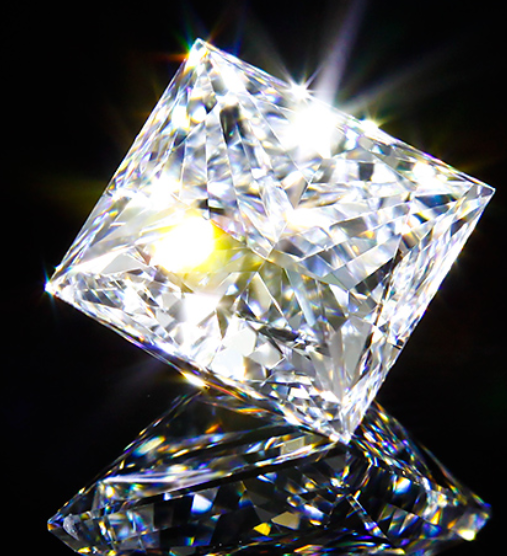
If you have a halo setting however, which encircles the sides of the diamond and also often blocks light from below, your diamond's sparkle potential drops. It isn’t because the diamond is not good but you just need that light to reach the sides and bottom of the gem to get the best from its sparkle.
Finally, just to dispel a myth bigger isn’t always better when it comes to diamond size and sparkle. You hear someone boast about a huge rock in their engagement ring and how much it cost but here’s the big thing - bigger diamonds do not sparkle more than smaller ones.
Actually larger diamonds tend to sparkle less because there is more internal space that the light has to traverse. A smaller diamond will actually sparkle more so there’s your big dilemma. Do you want a big expensive diamond with less sparkle or something smaller with more intense fire? That’s a personal choice of course but diamonds are supposed to sparkle. Why waste more money on one that sparkles less?
Which Diamond Cut Has the Most Sparkle?
There are benefits to most of the 10 common diamond shapes used in modern diamond cutting and it’s not always about the sparkle. We have established that more facets usually means more sparkle so the cut with the most facets is usually the round cut also known as the brilliant cut for obvious reasons.
It should be pointed out however that the round cut wins as long as cut quality, color and clarity are all equal. You can in theory get more sparkle from an oval cut if the diamond itself is better quality than a round cut it is compared to.
Take as an example two diamonds, both one carat in weight, but with one being a couple of color grades lower than the other. The diamond with the color issue is cut into a round shape while the completely colorless one is cut into an oval. In this situation the color issue will cause the round to have less sparkle than the oval.
This can also happen if the other diamond has poorer clarity or the cut is not as well performed. This is the nature of diamonds so factoring in the 4 C’s carat, clarity, color and cut quality is important when looking for the most sparkly diamond.
Do Lab Diamonds Sparkle?
The technology we have today allows us to make diamonds in a lab setting and they have become very popular. Not everyone is a fan of the diamond industry and honestly I can understand that because it has had its share of controversy over the years.
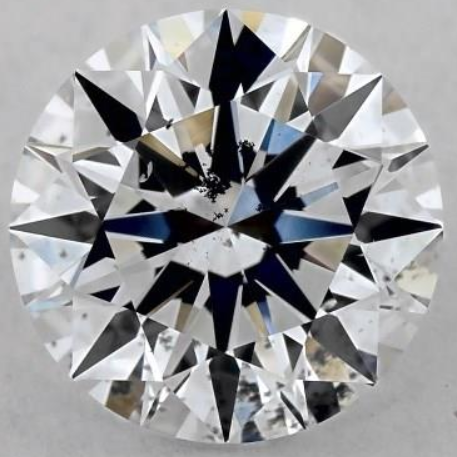
The question is do lab grown diamonds sparkle? The answer is yes they do and they sparkle just as brilliantly as the real thing in most cases. They may be referred to as synthetic but realistically they are almost identical to real diamonds when it comes to actual structure.
Do Simulated Diamonds Shine?
So what do we mean by simulated diamonds? As mentioned above we can make diamonds in the labs these days and they are generally cheaper than the real thing. If you are working on a tighter budget however you may be looking to buy something that looks like a diamond but isn’t a diamond.
These faux diamonds are usually made from cubic zirconia or moissanite. At a glance you might mistake them for a diamond but upon closer inspection there is seldom any doubt that they are not. These fake diamonds simply do not sparkle like the real thing.
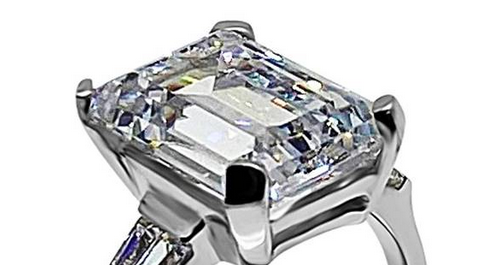
Some fake diamond materials may have slight sparkle but when compared to a real diamond it is obvious they are not the same. That being said not everyone can afford a real diamond so there is no shame in opting for a facsimile.
Final Thoughts
There are a number of factors that go into creating the maximum sparkle from a diamond. Some are controllable while others are not. Certain shapes will give you the best sparkle like the round cut but you also need a quality gemstone and an expert craftsperson to get the best out of the stone.
Reference Diamond Size Chart
If you use any of the definitions, information, or data presented on Diamond Size Chart, please copy the link or reference below to properly credit us as the reference source. Thank you!
-
<a href="https://diamondsizechart.com/blog/what-effects-a-diamonds-shine-the-most/">What Effects a Diamonds Shine the Most?</a>
-
"What Effects a Diamonds Shine the Most?". Diamond Size Chart. Accessed on April 28, 2026. https://diamondsizechart.com/blog/what-effects-a-diamonds-shine-the-most/.
-
"What Effects a Diamonds Shine the Most?". Diamond Size Chart, https://diamondsizechart.com/blog/what-effects-a-diamonds-shine-the-most/. Accessed 28 April, 2026
-
What Effects a Diamonds Shine the Most?. Diamond Size Chart. Retrieved from https://diamondsizechart.com/blog/what-effects-a-diamonds-shine-the-most/.