What Does Diamond Color Mean?
Our product recommendations are made independently, but we may earn affiliate commissions if you use a link on this page.
When it comes to precious stones arguably diamonds are the very top of the heap. Forged in immense heat and pressure miles below the earth's surface over thousands of years these lumps of essentially carbon can become amazing gemstones.
These gems look great when set into various types of jewelry including broaches, necklaces or even a diamond engagement ring. Depending on their quality and cut these diamonds can be truly stunning offering a sparkle or fire that can be almost hypnotizing.
The difficulty with diamonds however is that you could perform the most perfect job cutting a diamond but if the gem's natural quality is poor it will not be of value. Diamond value is dependent on the so-called 4 C’s: cut, carat, color and clarity.
In today's article we are going to look at the color aspect of diamonds. What does it mean to have a low color rating and how does that affect the value of the stone? Ideally a colorless diamond is prized most highly but let's take a closer look at the issue of coloration in a quality diamond.
What Does Diamond Color Mean?
We will start out by noting that there are gems known as fancy diamonds that are sold specifically based on their color. These are generally cheaper than clear diamonds but there is a market for them. These colors include red, green, purple, and orange which are the most rare, followed by pink and blue. Shades of yellows and browns are the most common fancy colors.
In this article though we are looking at white or clear diamonds whose value hinges on just how colorless they are. Basically a diamond that has no color and is essentially as transparent as glass is highly prized. This is because it is rare.
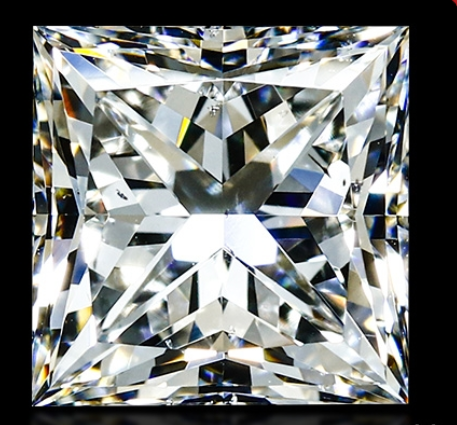
Most diamonds have some level of color and in clear diamonds these will be light indications of yellow that are visible at various grades.
The reason why colorless diamonds are so coveted is that they allow maximum light through which adds a great deal to the brilliance of the gem. A diamond with a lot of color has an effect much like a cloudy day. The light just does not travel as well and the diamond can be dull when it comes to brilliance.
Often we can’t visibly see the color in a clear diamond with our eyes but special light measuring equipment can pick it up. Independent graders use such equipment to rate the color of quality diamonds before assigning them a grade.
What Are the Diamond Color Grades?
The color scale most commonly used today was created by the Gemological Institute of America (GIA) and uses an alphabetic grading scale. It is probably one of the only grading scales in the world where getting a D is the best possible result.
The Scale Explained
- D-F: Completely colorless
- G-J: Near Colorless
- K-M: Faint Yellow
- N-R: Very Light Yellow
- S-X: Light Yellow
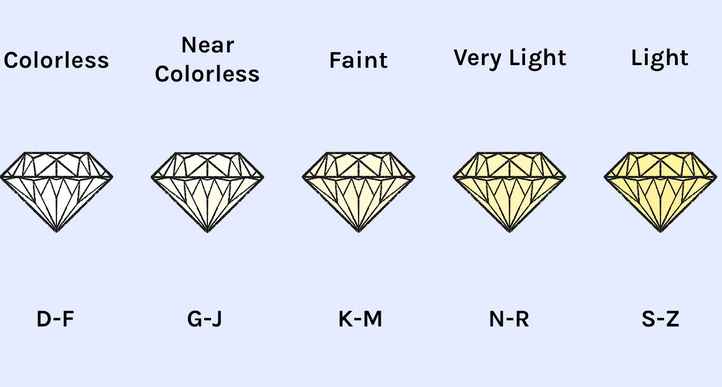
The ideal diamond color for a white diamond would be completely colorless so getting a D grade is the very best you can hope for. This is the most valuable. As you get further through the alphabet you get increasing amounts of color in the gem which at first may not be noticeable but as you progress through the grades you get to color levels you can't ignore.
How Does Color Grade Affect Value?
In a test of available gems on James Allen we searched for one carat diamonds with a clarity of VVS2, cut quality of very good and that are cut in the round brilliant shape. We then searched the prices for diamonds at different color grades:
- D (colorless): $6,840 - $10,240
- G (near colorless: $5,290 – $8,450
- K (faint yellow): $2,980 – $4,020
Now James Allen does not appear to sell diamonds below a color grade of M and at the time of checking they had no M quality gems that matched our other search parameters. The point however has been made as there is a clear trend of decreasing prices based on the color levels in the diamonds.
Higher graded diamonds in terms of color command the bigger prices and the diamonds that have visible color are simply more common and less desirable.
Choosing the Right Color Grade
It is understandable that sometimes we will be willing to accept a lower grade in order to be able to afford a good diamond overall. If you are buying a diamond for jewelry for example some clever shopping can help you negate the effects of a lower grade of color.
If it's in our budgets getting a rare colorless diamond of course would be the ideal. A D diamond would be the dream but Es and Fs to the naked eye would appear colorless and be slightly less expensive. The sweet spot for color that is not visible and value for money sits in G, H and I graded gems.
If you can’t afford anything over a J rating you can still make this work you just have to be smart with your setting materials. You will not want to be using any white metals like silver, white gold or platinum. This will bring attention to the yellow color in the diamond and make it more noticeable.
A diamond rated J or below will look best and less obviously colored against a yellow gold setting. This will allow you to save money on the stone if you need to while still having a stunning piece of jewelry as the end result.
Final Thoughts
Color in a white diamond makes it less desirable as it can limit the sparkle of the gem and sometimes make it appear like it needs cleaning. You can buy specifically colored diamonds but they are their own market.
The white diamonds are the ones prized for their light manipulation properties that create brilliance and fire. This is a big selling point for these often very valuable gems. Ideally you want a colorless white diamond but these are the rarest and most expensive.
Most people's budgets will require some flexibility in color and if you do things right you can get away with this and still feel like you have a fantastic gem.
Reference Diamond Size Chart
If you use any of the definitions, information, or data presented on Diamond Size Chart, please copy the link or reference below to properly credit us as the reference source. Thank you!
-
<a href="https://diamondsizechart.com/blog/what-does-diamond-color-mean/">What Does Diamond Color Mean?</a>
-
"What Does Diamond Color Mean?". Diamond Size Chart. Accessed on April 28, 2026. https://diamondsizechart.com/blog/what-does-diamond-color-mean/.
-
"What Does Diamond Color Mean?". Diamond Size Chart, https://diamondsizechart.com/blog/what-does-diamond-color-mean/. Accessed 28 April, 2026
-
What Does Diamond Color Mean?. Diamond Size Chart. Retrieved from https://diamondsizechart.com/blog/what-does-diamond-color-mean/.