The Four C's Explained
Our product recommendations are made independently, but we may earn affiliate commissions if you use a link on this page.
Diamonds are beautiful gemstones that have been formed deep in the earth over thousands of years by extreme heat and pressure. Originating from black carbon these gemstones come out of the ground as rough diamonds which need to be cut, shaped and polished into the amazing stones we prize so much.
There are some natural elements to diamonds and some things that they have done to them which go into the value of the gemstone. These things include the elements of the 4 C’s.
In this article we are going to take a more in depth look into what the four C’s are and how they affect the value of diamonds. When we understand the 4 C’s we can make the best choice when it comes to buying a diamond which can be set into a piece of jewelry such as an engagement ring.
What Makes a Diamond Valuable?
Aside from obvious properties that diamonds possess, the biggest reason diamonds are considered valuable is their perceived rarity. In all honesty this rarity is a little over inflated because there are more diamonds than you would think.
The diamond industry strictly controls the supply of diamonds so as not to flood the market and decrease their value. Of course even if they are not really that rare the high quality diamonds are limited in number so this makes them more valuable.
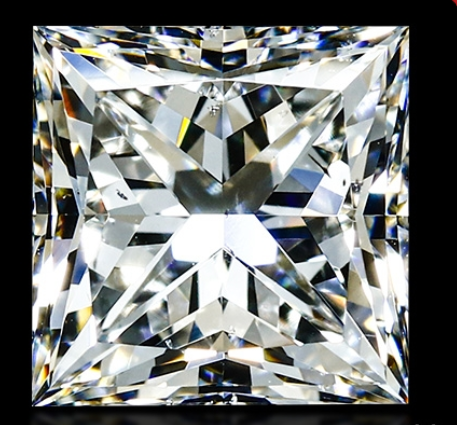
Another factor to consider is that diamonds are all 100% unique, no two are exactly the same. In a real sense each diamond is one of a kind. The individual properties of each diamond and the way in which it was processed all go into determining its intrinsic value.
Gemologists use a precise methodology to help determine the value of top quality gems. This is a grading system that has been in place since the 1950s and was developed by the Gemology Institute of America (GIA).
The GIA is still administering grading tests on diamonds today and other gemology labs also use their model in their own grading. There are even some labs who have further refined their grading systems to go into more detail regarding the quality of diamonds.
This system created by the GIA revolves around the so-called 4 C’s which are carat, clarity, color and cut. They did not invent the concepts behind the 4 C’s however as diamonds have been judged based on these factors for thousands of years.
Some 2000 years ago in India the first diamond grading system was being used to determine clarity, color and carat weight. These factors were used to determine the value of these stones but we have come a long way since then.
The Four C’s
When it comes to determining the value of a diamond, experts factor in what is known as the 4 C’s. This as mentioned stands for carat, cut, clarity and color. They are essentially the main legitimate variables that dealers consider when determining a diamond's value.
The 4 C’s of a diamond are graded by an independent third-party gemology lab. These labs have no skin in the actual trading of the diamonds so should not have any reason to inflate a diamond's worth. As such you can trust their reports to give you an accurate account of the diamonds quality and infer their potential value.
The top three Gemology Labs in the US are:
- Gemological Institute of America (GIA)
- International Gemological Institute (IGI)
- American Gemological Society (AGS)
The 4 C’s measure the desirable aspects of the diamonds and judge them on a scale. Value is then assessed based on how close to a perfect grade the diamond receives in the respective categories. It is rarer for diamonds to be perfect in all aspects so as a result when they are so then the value of the gem is higher.
Some factors have a bigger impact than others as we will explain in this article. Thanks to these many variations it means that diamonds can vary greatly in terms of price. The good thing about this is that there is essentially a diamond to suit any budget.
Carats Explained
You have likely heard of the term carat before when it comes to jewelry often in terms of gold, for example 24 carat gold. With regards to gold the carat is considered a measure of purity. Essentially 24 carat gold is 100% gold with no other metallic impurities. 18 carat gold would have some other metals in the mix so is therefore less pure.
When it comes to diamonds there is no question of purity so carat actually refers to a measure of weight. They are not only the hardest natural material on earth but they are also extremely dense due to a close packed crystalline structure. In the modern system a carat in weight terms is equal to 0.2 grams roughly the weight of a paperclip.
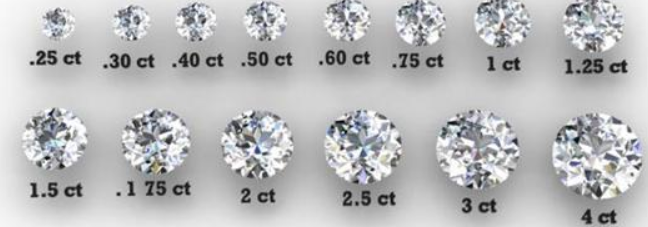
Using extremely sensitive and specialized scales the gemology labs weigh the diamonds once they have been fully cut and prepared to get a result in grams. When you divide the actual weight of the diamond by 0.2 you will get the carat weight of the item.
As an example a diamond weighing 0.6 grams would be considered a 3 carat piece. This would be considered a large diamond compared to what you would ordinarily find in a ring as they tend to range between 1 – 1.9 carats in weight.
So the more a diamond weighs the larger it is physically speaking although some diamonds can be more dense than others so they may not be visually perceived as larger. This is why the weight of the diamond is the important factor in terms of carats.
The carat weight however is not factored into the value of the diamond until all of the other 4 C’s have been determined. This is because a raw diamond's weight includes rock and unusable diamond material that gets discarded. So until it is fully prepared the diamond does not get its official carat weight.
The largest rough diamond ever found was the Cullinan diamond which was unearthed in South Africa in 1905. This raw diamond weighed 3,106 metric carats and was painstakingly cut into nine large gemstones as well as 97 brilliants and a number of other small unpolished fragments.
Clarity Explained
If you are new to the world of diamonds you may not have heard the term clarity before but this is an important aspect when it comes to determining the value of a diamond. As the name suggests clarity refers to the transparency and purity of an item.
Ideally if the diamond is a clear color it should have a clear or clean appearance. It is rare to have a completely clear or flawless diamond so when you find a gemstone like this you have something extremely valuable.
Diamonds often have imperfections which are generally referred to as inclusions or flaws. These may be specks, areas of cloudiness or signs of feathering. Under 10x magnification gemologists will scour the internal aspect of the diamond looking to find any such imperfections.
The better the clarity of the diamond the more valuable it is. So if the experts are seeing few imperfections then the value of the gem is going to be higher but the more issues that are visible the more the price will drop.
The diamond clarity scale according to the GIA is as follows:
Color Explained
In general terms for a high quality colorless diamond experts will be looking for an absence of color. They want to see a diamond that is as close to completely transparent as possible. Almost all diamonds have at least some coloration in them but you do get ones that show almost none and these are very valuable.
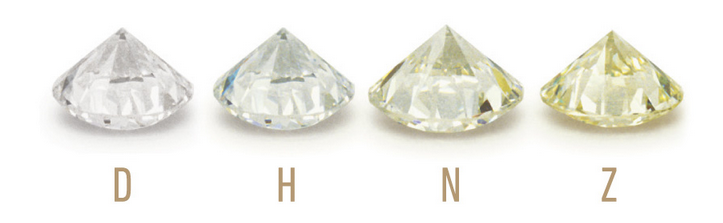
It is important to note that this does not mean that colorful diamonds have no value. In fact colored diamonds do have value just generally not as much as the colorless ones. Colored diamonds are referred to as fancy diamonds and will generally be less expensive.
There is an exception however as fancy blue and fancy red diamonds are both incredibly rare. This makes them more sought after.
According to the GIA there are 23 color grades for white diamonds which are labeled using letters. The grading is as follows:
- D-F: colorless
- G-J: near colorless
- K-M: faint
- N-R: very light
- S-Z: light
Cut Quality Explained
Finally we come to the aspect of a diamond which is in the hands of the person who worked the raw diamond. The cut quality of a diamond is very important when it comes to value because it has such an impact on how the natural properties of diamond are displayed.
Often people confuse the term cut with the specific shape the diamond is cut into such as the princess, cushion or heart cuts. Although the shape does affect the diamond's value, when it comes to the 4 C’s cut refers to how well the diamond was processed by the craftsperson.
When diamonds come out of the mines they look like little rocks still encrusted with the material in which they were found. A craftsperson will use their expertise to strike the diamond along planes of cleavage to remove unusable materials and expose the gem.
The diamond-cutter will then add shape and facets to the diamond which are intended to make the most of the gem's light processing abilities.
Experts will judge how well the craftsperson has done in terms of making the diamond proportional, symmetrical and pleasingly shaped. The intent is to maximize the fire, sparkle and brilliance of the gem.
It should be noted that not all diamond shapes receive a grade for cut quality. In fact only round brilliant and princess cuts are graded in this regard. This is because they were the shapes which were researched heavily for over 15 years. Other shapes have not been studied as in depth when it comes to their light reflectivity so they are not graded or in fact cut to create maximum sparkle.
The sparkle of a diamond is created by the light that enters in through the bottom and sides of the diamond being reflected out through the top of the gem. Well cut facets reflect the light internally so when it escapes out there is a sparking effect also referred to as brilliance or fire.
The quality of the cut then is measured by 5 grades which according to the GIA are Poor, Fair. Good, Very Good and Excellent. Quite obviously the better the cut rating the more valuable the diamond will be.
Beyond the 4 C’s
When it comes to determining a diamond's value the 4 C’s or in the case of fancy shaped diamonds the 3 C’s are the most important components. The shape of the diamond does however have some impact on price.
A round brilliant for example will generally be the most expensive shape because it is designed to maximize the vital sparkle of the diamond. Diamonds in this shape are more popular and as a result command a higher purchase price.
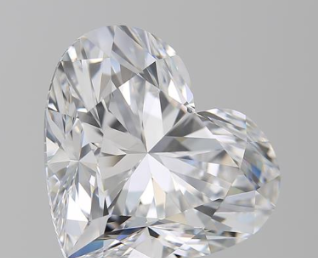
Despite some of the fancy shapes being complicated to create they will generally be less expensive although still sought after.
Another element that may affect the price of a diamond is the big name factor. Without a doubt you will find that if you buy two nearly identical diamonds one from somewhere like James Allen and the other from Tiffany there will be a premium price for the Tiffany gem.
People are often willing to pay markedly more than an item is worth to be able to say that it came from a big name store. With the reputation and high profile name recognition that Tiffany & Co. enjoys they can charge sometimes up to twice as much for a diamond.
Final Thoughts
If you are going to buy a high-quality diamond then there is a golden rule. You must make sure it has been graded for quality by one of third party independent gemology labs to ensure its quality.
They use the 4 C’s to determine how good a diamond is and because they receive nothing from the sale of the item they have no incentive to lie or embellish. The 4 C’s are very important when it comes to determining the value of these beautiful gems.
Reference Diamond Size Chart
If you use any of the definitions, information, or data presented on Diamond Size Chart, please copy the link or reference below to properly credit us as the reference source. Thank you!
-
<a href="https://diamondsizechart.com/blog/the-four-cs-explained/">The Four C's Explained</a>
-
"The Four C's Explained". Diamond Size Chart. Accessed on April 28, 2026. https://diamondsizechart.com/blog/the-four-cs-explained/.
-
"The Four C's Explained". Diamond Size Chart, https://diamondsizechart.com/blog/the-four-cs-explained/. Accessed 28 April, 2026
-
The Four C's Explained. Diamond Size Chart. Retrieved from https://diamondsizechart.com/blog/the-four-cs-explained/.